
How to Read a Garment Before Buying Online
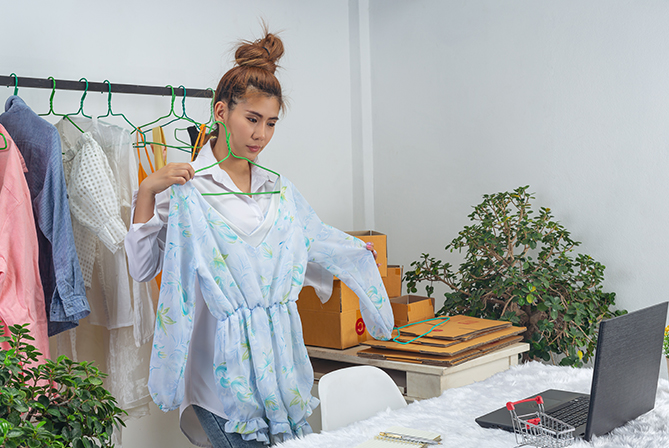
Buying men’s and women’s clothing online without knowing how to evaluate it is gambling. You can’t touch the fabric. You can’t test the fit. You’re relying on images and product descriptions. If you don’t know how to read those details properly, returns become routine.
Here’s how to assess a garment before you click “buy.”
1. Start With Fabric Composition
Ignore the marketing adjectives. Focus on the fabric breakdown.
If a men’s shirt says “100% cotton,” that’s a baseline of breathability. If it’s “polyester-rich,” expect durability but less airflow. For women’s blouses or dresses, check whether elastane (2–5%) is included—this affects stretch and comfort.
Blends aren’t bad. But you should know what they imply:
- Cotton = breathable, natural feel
- Linen = lightweight, wrinkles easily
- Polyester = durable, heat-retaining
- Viscose/Rayon = soft drape, moderate durability
If the product page hides fabric details, that’s a red flag.
2. Study the Fit Description
Words like “slim fit,” “regular fit,” “relaxed,” or “tailored” are not interchangeable.
For men’s shirts, “slim fit” usually means narrower chest and waist measurements. If you have broader shoulders, check the size chart carefully. For trousers, compare waist and inseam numbers—not just “M” or “L.”
For women’s clothing, pay close attention to bust, waist, and hip measurements. A dress may fit at the waist but pull at the bust. If exact measurements aren’t listed, you’re guessing.
Never rely on model photos alone. Models are styled and pinned at the back.
3. Zoom Into Construction Details
High-quality product pages allow zooming. Use it.
Look at stitching density. Are seams straight? Do stripes align at the placket or side seams? For men’s shirts, examine collar structure—does it look stiff and structured or flimsy?
For women’s tops, check darts, seams, and button spacing. Gaps between buttons often signal potential gaping issues.
If details look blurred or intentionally obscured, assume the construction isn’t strong.
4. Check Length and Proportion
Length is rarely emphasized, but it matters.
For men’s shirts, verify whether it’s designed for tucking or casual wear. A shirt that’s too short will come untucked constantly. For trousers, check rise and ankle length.
For women’s dresses and tops, look for exact garment length in centimeters or inches. “Midi” on one brand may hit below the knee; on another, mid-calf. Proportion affects the entire silhouette.
5. Read Reviews Strategically
Don’t just look at star ratings. Read complaints.
If multiple buyers mention thin fabric, tight shoulders, fading color, or inconsistent sizing, take it seriously. For women’s garments, repeated mentions of “runs small at bust” or “see-through material” are clear warnings.
If reviews are overly generic and repetitive, they may not be reliable.
6. Understand Care Instructions
Care requirements tell you about durability.
If a men’s shirt requires dry cleaning despite being casual, maintenance cost increases. If a women’s blouse demands hand washing only, factor that into your lifestyle.